Introduction to Knitted Fabric
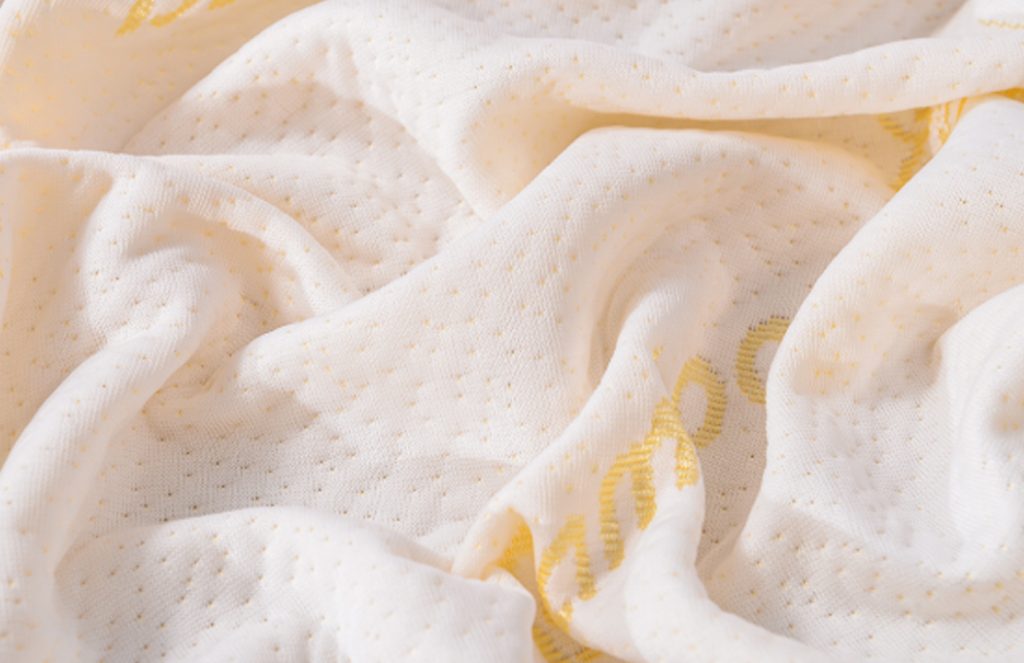
The fabric formed by bending the yarn into a loop and interlocking with a knitting needle is called knitted fabric, which can be divided into warp-knitted fabric and weft-knitted fabric.
Characteristics of Knitted Fabric
- Soft texture, moisture-absorbing and breathable, sweat-wicking and warm
- Excellent elasticity, wrinkle resistance, and extensibility
- High yield, suitable for small-scale production
Use of Knitted Fabric
- Clothing made of knitted fabric offers comfortable wear, a snug fit, and no constraining sensation, effectively highlighting the body’s contours. It is suitable for use as underwear, tight-fitting garments, and sportswear.
- Knitted fabric can also be used to make coats after changing its structure and improving its dimensional stability.
- The fabric can first be woven into a base fabric, then cut and sewn into various knitted items.
- Directly woven into fully formed or partially formed products, such as socks, gloves, etc.
- Fabric has also been widely applied in industrial, agricultural, and medical fields. Examples include dust-filtering cloths, high-pressure pipelines for oil and gas transportation, construction safety nets, fishing nets, bandages, and knee braces.
Classification of Knitted Fabric Making Process
Knitted fabrics are produced through two main techniques: hand knitting and machine knitting. Hand knitting, using traditional knitting needles, boasts a long history and exquisite craftsmanship, with patterns that are both flexible and diverse, making it widely popular and evolving in folk traditions. Knitting production is categorized into two major types: weft knitting and warp knitting. This process involves weaving yarns into warp and weft threads to create fabric structures, forming a crucial part of textile manufacturing. Depending on the raw materials used, knitted fabrics can be classified as cotton, wool, silk, or linen, with all such products collectively referred to as woven fabrics.
Editor’s Tip
Although knitted fabric has a wide range of applications, special attention should be paid to its drawbacks. Its disadvantages include the tendency to snag threads and difficulty in controlling dimensions.